Tabon Caves
The Tabon Caves sit at Lipuun Point near Quezon town, a limestone headland riddled with roughly 218 caves, of which some 38 have archaeological or anthropological importance.
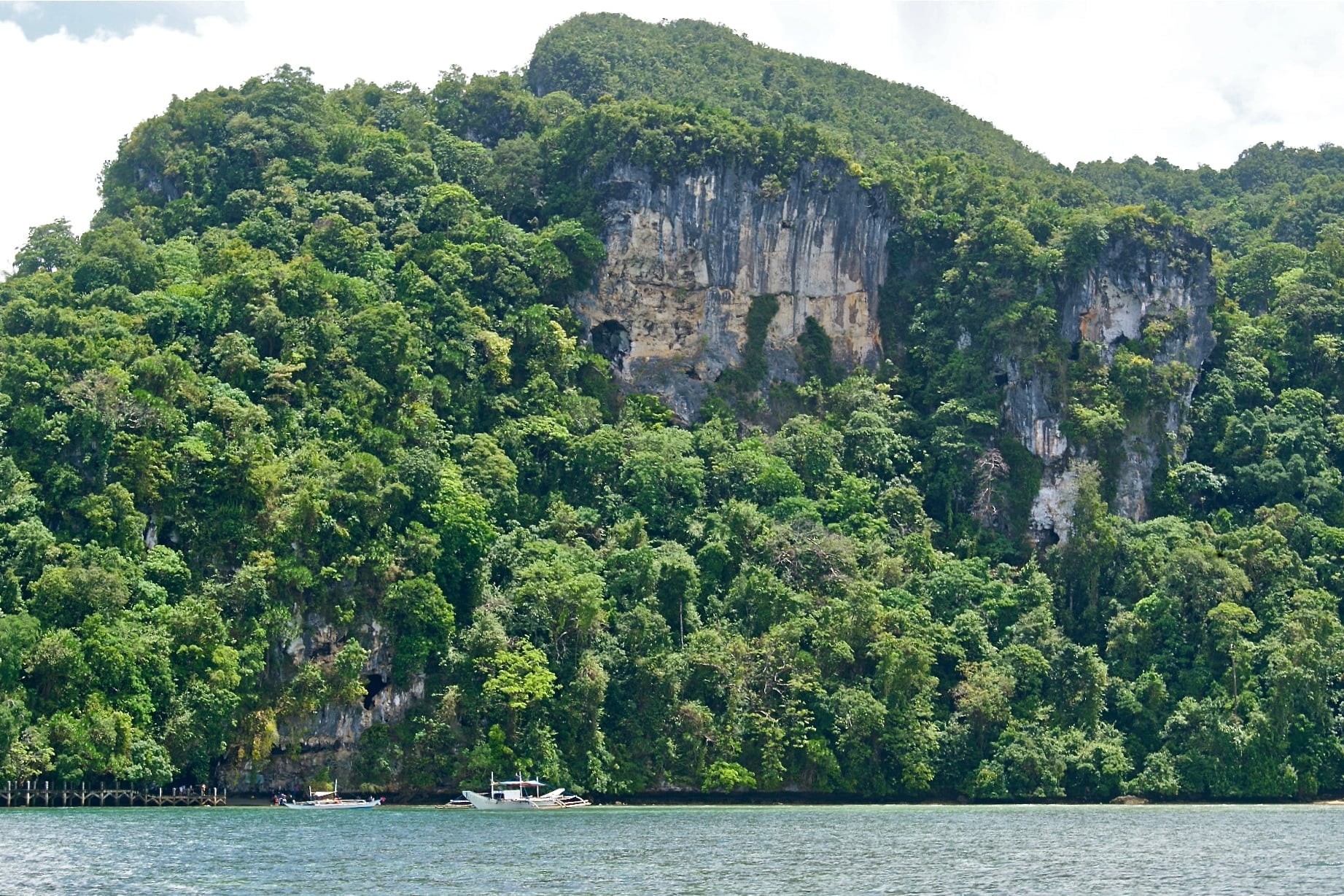
In 1962, National Museum archaeologist Robert Fox found a human skullcap here later dated to about 16,500 years old, along with a leg-bone fragment dated to roughly 47,000 years, the oldest known human remains in the Philippines. The site is often called the country's cradle of civilization for the depth and span of its jar-burial and habitation record.
Only Tabon Cave itself, the largest and most accessible of the complex, is generally open to visitors, reached by a boat crossing from Quezon town followed by a walk up to the cave mouth; a site museum at Lipuun Point explains the wider excavations.
Nearby
Sources (3)
- Coordinates 9°16'48"N 117°58'53"E, at Lipuun Point, Barangay Panitian, Quezon, Palawan; complex has roughly 218 caves, about 38 of archaeological importanceTabon Caves
- Tabon skullcap found in 1962 by Robert Fox, dated to about 16,500 years old; a leg-bone fragment dated to about 47,000 years, the oldest known Homo sapiens remains in the PhilippinesTabon Man
- Site managed by the National Museum of the Philippines, with a site museum at Lipuun Point reached by boat from Quezon townTabon Cave Complex